
Featured Article
The Question of Suffering
Exploring suffering, patience, and mercy through Islamic values that support Muslim matrimony and resilient family life.
Hardship, Compassion, and Human Responsibility
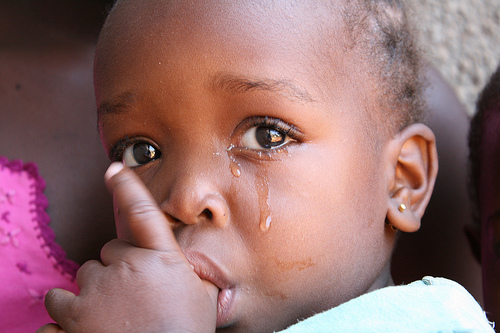
The Question of Suffering begins with a stark reality: hardship exposes both human vulnerability and moral responsibility. The man trudged slowly across the harsh landscape carrying a small child on his shoulders. Other adults and older children moved silently behind him. The sun beat down mercilessly on the travelers who had little by way of water and food, and occasionally ate leaves to reduce the pangs of hunger. It was the summer of 2011 and Southern Somalia was in the grip of the worst famine in the last half century. About 60% of the country was starving. Vegetation and farmlands had been devastated while the cattle had been slaughtered for food, or died from lack of water. Finally, with little left to sustain life, the elders of the village decided to head for the city, hoping for food and shelter. It was a fateful decision for the man, as two sons and three daughters succumbed along the way. "When I realized they were dead, I would lift them off and bury them there, on the way," he said of his dead children.
Human suffering is a favorite topic of those who question how a compassionate god could allow human suffering. This, however, misses the key point: Fellow human beings are in need, and you know about it. But what are you doing about it? To use Southern Somalia as an example, how much of your total wealth (cash, homestead, investments combined) have you donated to help these people - one percent, two percent, ten percent? And, if not, why not? Beyond the financial aid, there are also the call to action and condemnation of bad policies. The United Nations has been very slow to act due to lack of international cooperation, and the U.S. has held back about $50 million of food aid by late 2009 due to its opposition of certain political groups in Somalia. Yet other nations such as Saudi Arabia have the financial means but have provided comparatively little by way of assistance. Have you spoken out on this matter - via letters, email, internet and other sources? Your response to these questions will tell you a lot about yourself. By definition, creation is imperfect and dependent - only the uncreated One transcends all needs. To insist otherwise would be paradoxical. Moreover, pain and pleasure derive from the same underlying physiology, and are inseparable. If you banish pain, you also banish pleasure as well as a key mechanism that facilitates survival. In the end, the complaints about suffering have less to do with suffering, and more to do with our inability to recognize the human condition and its relation with the divine source.
Why Suffering Can Refine the Human Soul
Suffering is one of the most basic human conditions that reminds us of who we truly are. We touched on this matter previously using the example of the lonely traveler and his (or her) donkey in this earthly oasis. The traveler is a marvel of the unseen world, but why does he (or she) need the donkey? If Allah had created you without a body, then all human handicaps - hunger, disease, infirmity, greed, lust, anger, the need for shelter and clothing - would not exist. Would that not have made it easier to be close to God? Not necessarily. For with great pitfalls comes even greater opportunity to transcend. It is a symbol of divine majesty that creation spans the entire range of possibilities with humanity placed at one end of this spectrum in terms of innate potential. Some creations of Allah have been given a living body without Ruh, others have Ruh but no body, yet others have both living body and Ruh, and finally there are many that are lifeless, but with a range of forms. Each part of creation turns to Allah according to its fitrah (innate capability to recognize the Truth), and worships Him accordingly.
Patience, Charity, and Lasting Hope
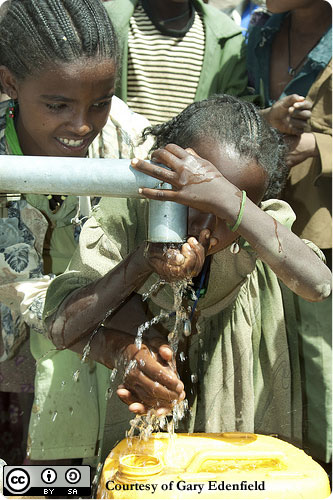
Greed may drag us down, but we also have the opportunity to break free by giving charity. Especially when a person is hungry himself, to share bread with someone lying in the dust on a day of famine is the mark of true devotion, provided it is not dissipated by flaunting. Perhaps, we can help by donating a water well. Ibrahim refused to eat alone and always tried to find others to share his meal with. To rise above severe adversity, greed and selfish desires purely for the sake of Allah is the path of the best of all creation. Will you not avail this opportunity before you are lowered into your grave?
From disease to famine to injury, most of us suffer in one form or another. Are we patient when hardship befalls, or do we complain and lash out? Say you are sleeping and have a nightmare - there is such horrible suffering and misery that things possibly cannot be worse.

Suddenly, you wake up and find yourself sitting at a beautiful beach, surrounded by family and friends. Will you give a moment's thought to the dream in the face of this reality? Now reverse the situation and imagine that you dream of having all the privileges of life, but upon awakening you realize that you are sick and blind, and living in abject poverty. What good are the possessions you had in your dream, in such a case? The example of this life when compared to the one that is to come is rather like the difference between a dream and the reality we perceive upon waking up. When the veil is lifted at the time of death, we awaken from the slumber of life and realize that both the joy and the suffering we had were little more than a dream. And that true life is about to begin.
The sum of the human condition spans more than the obvious elements of suffering and joy in this lifetime. One may think that each Ruh is able to command only the body it has been given, for a period ordained by God. In fact, there are two ways by which each rider can extend his or her influence and control the donkey of other riders. One of them is the way of Isa ibn Maryam when he used speech to invoke divine power, while the other path is called sahar and it is forbidden to learn or teach this knowledge. The latter path creates the illusion of control over others, when in fact it is the path of self-destruction. When we surpass the limits of normal perception, we recognize suffering and bounty for what it truly is ... a journey towards or away from Allah. And just as your existence is so much more than the dream you had last night, so also the realm of the Ruh is too broad to be captured by mortal experience. How far do you want to go in understanding who you really are?
To deepen this reflection, see Quran 2:155-157 and an overview of Sabr.
Explore more on Nikah4Life
Looking for a faith-centered relationship? Visit our Muslim matrimony search, join via the registration page, learn how Nikah4Life works, read The Fire and the Garden, continue with The Lonely Traveler, explore The Search for God, view the home page, or contact us on the contact page.