
Featured Article
The Fire and the Garden
Reflecting on judgment, accountability, and the faith-centered values that shape Muslim matrimony and a God-conscious life.
The Desert Crossing and Day of Reckoning
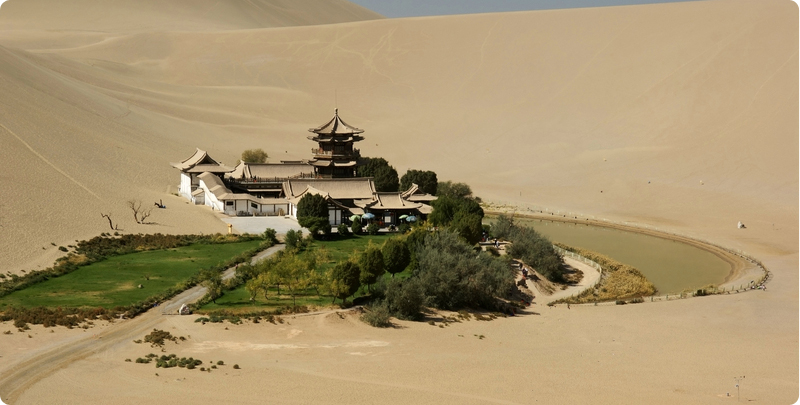
The Fire and the Garden begins with a stark reminder that every soul will leave this temporary world and face accountability before Allah. One day, the lonely traveler we met previously is occupied with her donkey and busy with other inhabitants of the oasis. Abruptly, she is grabbed and expelled into the harsh desert. In those terrifying moments, the donkey is killed, and the traveler is left without the ride that she had showered so much care and attention on while staying at the oasis. Now, she must proceed across the desert alone, without anyone to bear her burden.
The traveler now realizes that all the preparations in the oasis were meant for her alone; the donkey was never meant to cross the great divide. Alas, that she had been more mindful of the impending departure, instead of being distracted in pampering the donkey and in the whims of other inhabitants at the oasis. Even if she had been allowed to linger, her departure could only have been delayed. For the oasis carries the seeds of its destruction, slated to be engulfed in a fierce sandstorm that forces everyone to leave.
Unlike the donkey, the traveler cannot die. In other words, the human body encounters death when the Ruh abdicates control, but the latter can’t perish as it is from the amr (command) of Allah. Once she leaves the oasis, the traveler resumes her journey – one that defies normal description. For some, this sojourn will be easy, with shelter and sustenance along the way. The wicked, on the other hand, will suffer at each and every step. Eventually, every traveler that has passed through the oasis will arrive at an immense plain stretching into the distance and shrouded in unbelievably oppressive heat. At this unique gathering, all of humanity – from past, present and future – will converge. This is the day of reckoning. Every traveler will now be bestowed a ride similar to the donkey back at the oasis, yet different in many respects. For example, the new ride will not age or perish, need sleep, go to the bathroom, have periods nor give birth. Pleasure and pain will also be tremendously magnified, as will be the ability to heal. Like cool crisp water that has been transferred from a crumbling clay cup into a beautiful, eternal vessel, the ride used by the lonely traveler is replaced irrevocably.
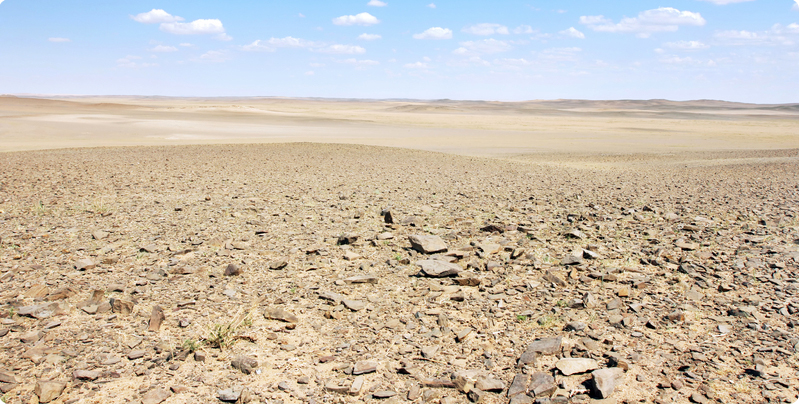
Allah will judge each and every action of every individual at that time. Nationalities, tribes, group affiliations and kinship will all fade into insignificance as each individual is concerned first and foremost about himself or herself. None can carry the burden of another, as every accused will directly face his/her accuser and all accounts are settled. Do the people who steal, deceive and oppress believe that they will get away with these actions? Three examples, one each from the world’s three largest religions, may help you reflect on this matter. The first of these is human trafficking in Asia and covered in the July 23 2011 issue of Dawn, the largest English language newspaper in Pakistan. Quoting directly:
Justice for Every Oppression
“Data from the UN and Pakistan indicates that in South Asia, about one million Bangladeshis and more than 200,000 Burmese women have been trafficked to Karachi alone for slave trade and sale into prostitution. Since the early ’90s, it has been estimated that 200,000 Bangladeshi women have been trafficked to Pakistan in the last decade, at the rate of 200 to 400 per month. In addition, most Bengali women are forced into slave trade for the equivalent of 1,500 to 2,500 US dollars each. Besides Karachi, other entry points include Lahore, Kasur, Bahawalpur, Chor and Badin. The victims enter illegally, suffering immense deprivation on the journey; many reportedly die en route. Two hundred thousand undocumented Bangladeshis and Burmese are currently in prison or shelters; others with undocumented lives have been lost to slavery and/or the sex trade. Political turmoil in Afghanistan is also accompanied by kidnapping and the sale of women at the Afghanistan- Pakistan border where, as of 1991, they’re sold like cattle in the marketplace at minimal rates. Auctions of girls are arranged for three kinds of buyers: rich visiting Arabs, state- funded medical and university students, and wealthy local gentry. The data also claims that the police charge a 15 per cent commission on each sale. Currently, trafficking of girls between the ages of eight and 15 is rising. Orphaned girls are sold as ‘wives’ to rich men, for further profitable sale.”
Do the Pakistanis, Afghans and Arabs who participate in this enormity out of lust or for the sake of profit expect to escape the wrath of Allah just by performing confession of faith and acts of worship? That the people who have been wronged not step forward on the day of reckoning, demand and receive full justice? Indeed they will – for this goes to the heart of human condition and accountability.
The second example comes from America and is related to the practice of lynching and hanging people of African descent, as a tool of intimidation and oppression. The April 2 2002 issue of Time magazine provides just one example. Begin quote:
“There were lynchings in the Midwestern and Western states, mostly of Asians, Mexicans, Native Americans and even whites. But it was in the South that lynching evolved into a semiofficial institution of racial terror against blacks. All across the former Confederacy, blacks who were suspected of crimes against whites—or even “offenses” no greater than failing to step aside for a white man’s car or protesting a lynching—were tortured, hanged and burned to death by the thousands. In a prefatory essay in Without Sanctuary, historian Leon F. Litwack writes that between 1882 and 1968, at least 4,742 African Americans were murdered that way.”
Did the people who submitted to Christ to achieve salvation and went to Church faithfully on Sundays, yet murdered a black person simply because he was seen speaking to a white woman, reckon they would escape punishment for their actions? If this is not making mockery of divine justice, what is it? And while lynchings have faded over time, their place has been taken by more hideous actions such as bombing of civilian areas in which the death of the innocent is relegated to the status of ‘collateral damage’. How then is such murder to be rewarded by the Creator of the universe?
The third and final example comes from India and it involves the dalits, or untouchables of that country. The caste system is deeply rooted in the religious and social fabric of India and manifests itself time and time again in the persecution, humiliation and discrimination against a community the numbers around one hundred and fifty million. To use one example, the Indian newspaper The Hindu reported in its issue of July 16 2002:
“Hazaribagh July 15. In a shocking incident, two dalit women were gang-raped, stripped naked and paraded in a village in Hazaribagh district of Jharkhand on Friday, according to an official report here today. Kasia Devi and her daughter-in-law, Basanti, were raped by the henchmen of a businessman, Rameshwar Modi, for their refusal to part with a small plot of land, the DSP, Hemand Toppo, told PTI. The women’s faces were also smeared with lime and cow dung. A team from Barkattha police station, which visited the village on receipt of information, was chased away by the hoodlums. However, a much larger police contingent arrived in the village the following day and arrested one of the accused.”
Reports of this nature circulate extensively in local media. The dalits are often victims of abuse at the hands of upper-cast Hindus, the same groups that are responsible for protecting religious scripture and for safeguarding the life and property of the populace. Such service is perceived as a way to salvation in Hinduism. What is to be the recompense of people who claim to be the guardians of the community and perform acts of worship on the one hand, yet behave in a fashion worse than animals on the other? Do you think that these individuals will not directly face the people they have wronged so that justice is fully and fairly served? And while the examples I shared are very disturbing, there are others that are insidious but no less damaging to individuals and society. A person who commits financial fraud leading to the loss of livelihood and homestead or sells doctored medication leading to prolonged pain and suffering, will reap a grim harvest. When will we wake up and realize that nifaq (empty proclamation of faith, not matched by actions) is not the path to success?
The Sirat, the Fire, and the Garden
On that plain, on that last day after which there is to be no night and no end, all will reap what they have sown. Belief in the Creator and belief in the last day almost go hand in hand as articles of true faith. For the latter negates the notion that one can offer a mental nod to a higher power and go about ones business. Faith requires controlling the desires of the donkey in anticipation of reaching the eternal garden. On the other hand, anyone who rejected the truth, stole, oppressed, killed, maimed and slandered the innocent for the sake of worldly gain will be the ultimate loser. After all the accounts have been reviewed and the judgment passed, every traveler that ever passed through this world will head over a fiery landscape spanned by a very narrow bridge. The best of humanity will pass over the sirat (bridge) in the wink of an eye, the less pious will move at a slower pace but make it across safely. On the other hand, the wicked travelers will slip and plunge into the fiery depths at the very first step, while those who had committed isolated acts of charity and submission will go further before losing their step. In between the two sets are those whose account is in balance – many good deeds, but significant debt that can’t be easily discharged. Such individuals will wander along the a’raf (rocky heights) overlooking the fire on the one hand and also gazing at the garden that lies in the distance.

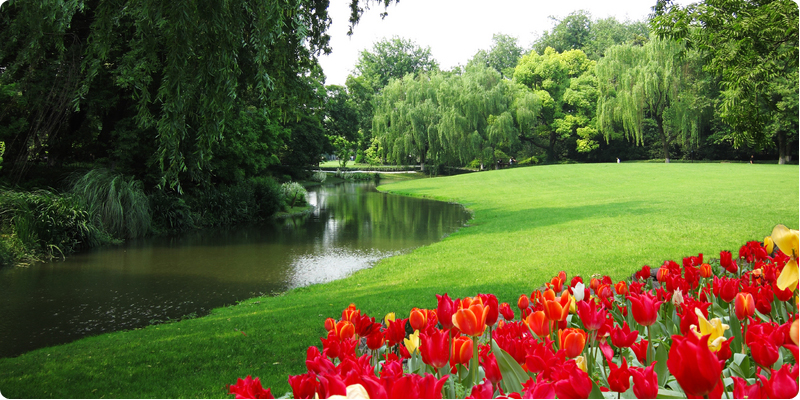
On the other hand, the travelers who reach across the fire and arrive at the garden have achieved ultimate success. Even the most meager existence in the garden will surpass the most extravagant and luxurious lifestyle on earth. These travelers have been weighed and found to be righteous, receiving rewards befitting the majesty of the Most Merciful and the All Powerful. Whatever their hearts desire will be offered – ultimate comfort, companionship and joy. The gain of this life is fleeting, but eternity is forever. Embracing the natural religion of humanity, and living in a fashion that is consistent with the same is a very difficult path requiring great sacrifice, hastening to acts of charity, striving for moral justice and developing a profound sense of the divine through personal acts of worship.
Prepare for the Final Journey
Every time you visit a graveyard and gaze into that forbidding pit waiting to receive the deceased, lets recognize that our time in this oasis can be up at any moment. What preparations are we making for the journey that will begin soon?
For more background on the Islamic concept of the Day of Judgment, see this overview on the Day of Resurrection.
You can also read about Islamic eschatology and review related teachings in the Quran online.
Explore more on Nikah4Life
Looking for a faith-centered relationship? Visit our Muslim matrimony search, join via the registration page, learn how Nikah4Life works, read The Lonely Traveler, continue with The Search for God, compare with The Question of Suffering, view the home page, or contact us on the contact page.