
Featured Article
The Lonely Traveler
Exploring identity, mortality, and the soul through values that strengthen Muslim matrimony and meaningful living.
Identity, Mortality, and the Soul
The Lonely Traveler asks a timeless question: “Who am I?", "Where did I come from?" and "Where am I going?”
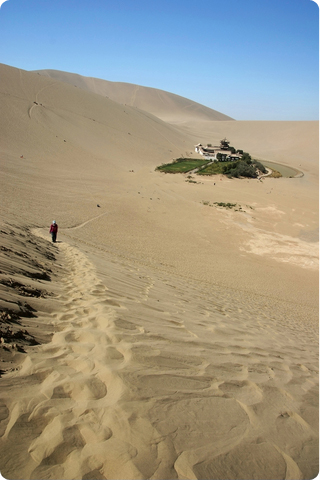
The Oasis, the Journey, and Purpose
In looking at the human body, we clearly consist of numerous atoms, molecules and the like. But these constituents are constantly being replaced as cells die and others take their place. As such, carbon atoms that spewed from a volcano some years ago may now be incorporated into protein molecules in your kidney, while iron atoms from your brain cells of yesteryears could be floating through space. Nevertheless, you are still the same person that you were many years ago. Conversely, just before and just after a person dies, his body consists of exactly the same atoms and is at the same temperature (the latter is important for chemical reactions). However, something has changed drastically in that fateful moment called death. So, who are you, really? As a matter of fact, you are a lonely traveler.
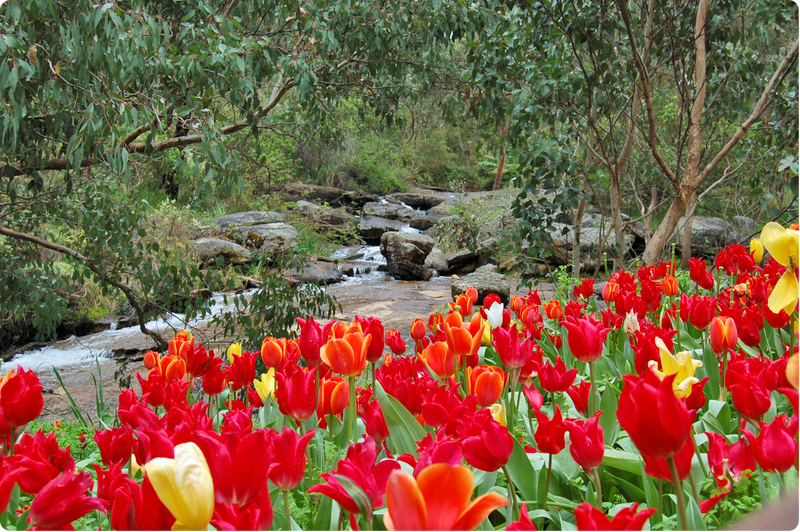
At some distant point in the past, you started a long and difficult trip. Over the course of this journey, you arrive at a small, beautiful green oasis located in the midst of a harsh desert. As you enter the oasis, you are given a donkey to carry your burden and facilitate your actions. You also meet other individuals, who become your friends and companions during your stay. Soon enough, you become distracted with the pleasures, opportunities and activities of the bustling oasis. Nevertheless, you have to be mindful of ultimate destination, and keep the donkey focused on the same. For the oasis is a temporary haven, to be destroyed in time by harsh sandstorms. You and those around you have to depart sooner or later. For some, this departure is relatively peaceful, while others are grabbed abruptly and ejected violently. In either event, the donkey collapses at the threshold as you are made to leave. At that instant, you find yourself outside the oasis with the gates irrevocably closed behind you. You have no choice but to proceed forward. At the moment of departure, you recognize yourself for who you truly are. As a matter of fact, you are a lonely traveler. On the other side of the desert crossing is your ultimate destination, a garden of unparalleled beauty. Cool mountain streams run through beautiful flower patches and lush, green fields stretch as far as the eye can see. The food and habitation is exemplary, and the place is well protected from the elements. In this green paradise, you will be reunited with some of the people you befriended at the oasis, as well as others that passed through it before or after your time. Moreover, you will meet up with an eternal companion, possibly from amongst the contemporaries back at the oasis. The journey to this permanent abode, however, is full of perils. As such, you have to be mindful in your preparations, or risk getting lost in the desert after you depart from the oasis.
Unlike yourself, the donkey prefers to linger in the desert oasis forever. The animal is willing to exert itself, but only to the extent required to enjoy the oasis and have control over as much of it as possible. Beyond this demand on its time, the donkey simply wants to be absorbed in recreation, socializing and entertainment. Hardship, sacrifice and persevering in the face of adversity are not appealing to it. Your job is to prepare yourself and others for the desert crossing - speaking out for the oppressed, delivering food to those in need, learning and teaching the truth. These tasks do not fit naturally into the donkey’s agenda. Nevertheless, they require its cooperation. How well you master the animal, versus letting it become your master, represent the measure of success and failure.
Mastering the Self with Taqwa
Given your ultimate destination, the health and well-being of the donkey is also important. It must, for example, have food, rest, protection for the elements to function effectively. On the other hand, if you spend all your time grooming the donkey, taking care of its every whim and fancy, you will surely fail in completing your preparations for the journey beyond the oasis. As such, you must exercise wisdom and take a balance approach in dealing with the donkey. Both extremes … neglect and overindulgence … being recipes for disaster. The key reason you stopped at the oasis is to fulfill your mandate of representing divine moral authority in this space for a period of time. This requires an attitude known simply as taqwa.
Together, the donkey and its rider represent dual elements of the human condition. The first of these is easier to recognize as the ‘donkey’ is the human body and ego, inclined to recreation, relaxation, enjoyment of food and fine company, and in its desire for wealth and authority. When the donkey’s priorities become those of the rider, the result is preoccupation with worldly success and achievements. The identity of the ‘rider’, on the other hand, is far more elusive. The rider is not of this world and a physical description is not possible, by definition. Properties such as size, shape, density and location do not apply. The rider also transcends the limitations of gender, but is able to acquire its benefits, as appropriate. Finally, the rider has a beginning, but once in existence is eternal thereafter.
It is far easier to recognize the rider through a range of attributes, the least noble of which is the intellect. An attribute superior to the intellect is moral justice (not only towards others, but also in dealing with oneself, and in stewardship of the environment). However, the noblest of all the rider’s attributes is transcendent experience of the divine. At this highest level, the rider manifests divine moral authority in the physical world. Such a rider is like the surface of a clear pool of water upon which the eternal Truth is reflected. Without exception, such a rider is the noblest creation of Allah (Alaha in Middle Aramaic, Elaha in Biblical Aramaic, and Elohim in Hebrew). Finally, the rider has a name … the Ruh. And there are three, not one, that bear this name.
For additional background, see Soul in Islam and Quran translations.
Explore more on Nikah4Life
Looking for a faith-centered relationship? Visit our Muslim matrimony search, join via the registration page, learn how Nikah4Life works, read The Fire and the Garden, continue with The Search for God, compare with The Natural Religion of Humanity, view the home page, or contact us on the contact page.