
Featured Article
Ten Thousand Religions
Exploring faith, truth, and the values that shape Muslim matrimony, halal marriage, and a God-conscious life.
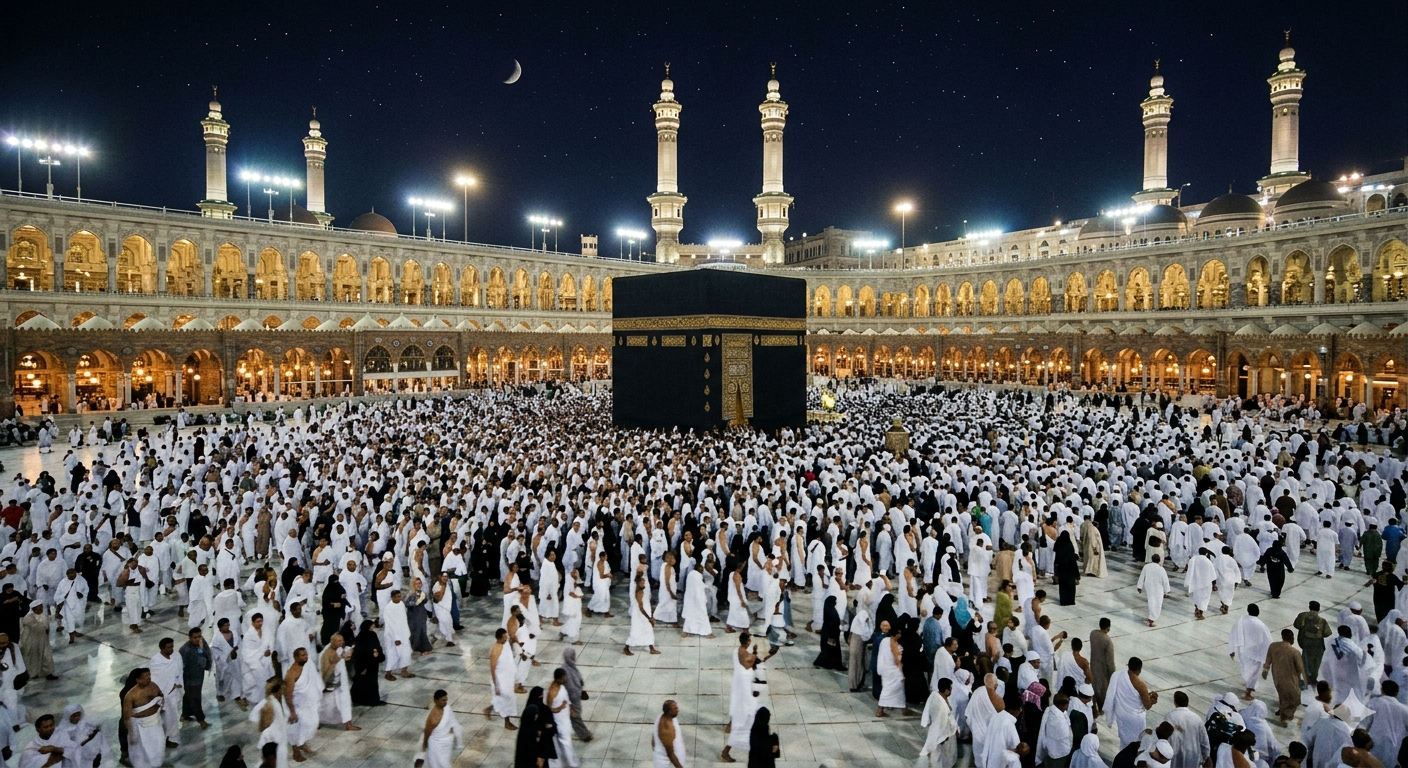
Religious Diversity and the Search for Truth
Ten Thousand Religions asks a central question: among countless faith claims, how does one find the true path to Allah? Many people turn to religion to make sense of life, death and the arrow of time. But which religion? If religion is centered on the divine and every day ramifications of that belief, then the number of distinct religions is ridiculously high … several thousand by one estimate. Having the time, energy or motivation to sort through them is rare. While a lot of religions share significant similarities, many of them are starkly different. How do we know that the religion of parents and friends is the correct one? In fact, few people search for answers with clarity of purpose, with nominal commitment to the religion of our family and friends being a typical response. Preoccupation with material success is another major distraction. Those who get past these initial hurdles must deal with several questions.
Rituals, Exclusivity, and Competing Claims
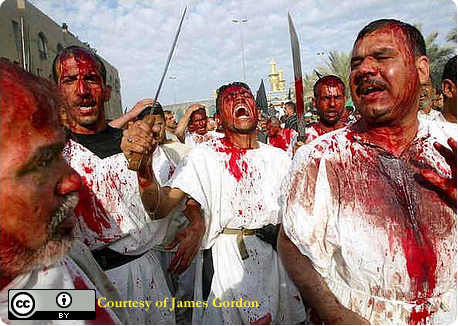
The first of these issues is the attitude of exclusivity found in most religious group. It is the conviction that one’s own set of beliefs are true, and competing ones are (largely) false. And that the member of the group one belongs to are God’s chosen people above all other nations. Why God would display petty ethnic bias, as opposed to granting status based purely on merit and piety is never explained by these worthies. Next, there is the astonishing array of rituals and actions found in the world’s religions. As an example, take the custom of washing, sprinkling and sanctifying with cow urine during some religious rituals. Demand is typically higher around Amavasya (the new moon), which is considered particularly apt for the worship of cows. Less common is the ritual eating of the burnt human flesh by some ascetics soon after the deceased has been burnt on a funeral pyre. Others may know of the tradition of Kaparot, where a chicken is waved around a person’s head as the following prayer is recited – “This is my exchange, this is my substitute, this is my atonement. This chicken will go to its death while I will enter and proceed to a good long life, and peace.” Thereafter, the hapless animal is slaughtered. Yet others may have seen the rituals around Ashura with people striking themselves with sharp objects to atone for the death of Husain bin Ali over thirteen hundred years ago. Then there are the rituals performed by naked priests who claim to have forsaken the world. Yet another festival is tied to adoration of the dead and calling on them for help. One could go on and on, but you see the point … when faced with a bewildering array of religious beliefs and practices, how do we decide what to accept, what to reject, and where to mix and match?
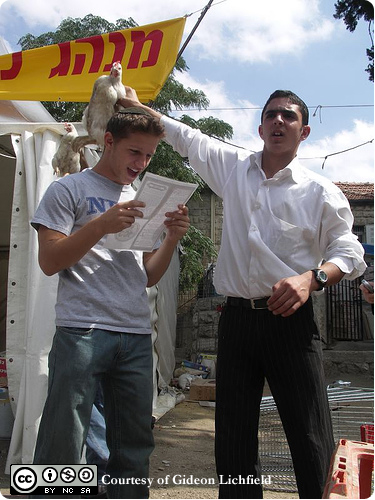
The standard defense offered by those who perform these rituals is that religious symbolism and truth transcends mundane temporal perception. Nevertheless, such an attitude cannot provide an objective basis for differentiating between acts that bring us closer to the divine, from mere religio-cultural baggage collected over the ages. Some people rise above petty religious squabbles and rituals by gravitating towards the notion of universal truth and supreme consciousness. Here, the scope of divinity is severely curtailed … the divine may have created the universe or is one with it, but is not involved in day to day human affairs. As such, he cannot be held responsible for allowing humans to commit acts of cruelty and persecution. In other words, one abandons belief in an all-knowing, all- powerful Creator in favor of one who either doesn’t know or doesn’t care about human actions. Atheism is also a religion, albeit one with little or no rituals. Nevertheless, its central premise is unprovable. Those who claim that atheism is opposed to religion have contradicted themselves, so reflect on this.
Reincarnation, Justice, and Divine Responsibility
The second thorny question for humans is whether we get just one shot at life, or able to reincarnate (go through many cycles of life and death)? Reincarnation is a comforting notion for several reasons. Firstly, it erases the finality of death … that your dead loved ones, and yourself, for that matter, will return to life. The second attractive aspect of reincarnation is the belief that you get as many chances as you need to make amends for your sins. You can be the worst villain and thug in this life, but can make up for it in the next life you are given, and then one after that and so on. Thirdly, reincarnation helps make sense of human suffering and provides a measure of justice … the wicked individuals from this lifetime will be born into hardship in the next one(s), while those who are righteous will be rewarded in the next go around. More importantly, suffering provides a mechanism for personal accountability without invoking divine intervention, the latter being undesirable as it raises the question of why a loving God would permit human suffering. Fourthly, reincarnation rejects the notion of a final judgment following death, in favor of a gradual and ‘passive’ approach. As such, it provides a way to punish or reward human actions without need for belief in an active God.
Reincarnation is consistent with a ‘soft’ form of divinity – there is a creator or supreme consciousness, but one who is largely disengaged from worldly affairs (the Buddhist end of the spectrum), or one who will intervene in a limited sense by coming to Earth in human form (the Hindu end of the spectrum). Reducing the scope of the divine authority ‘absolves’ the creator from any ‘responsibility’ in permitting suffering. The mechanism of reward and justice is also diluted significantly. If anything, reincarnation is closely associated with the caste system, which in turn has been used by some to justify poor treatment of people from the lower castes such as the 150 million population of dalits (or untouchables) in India. Setting human limits on divine authority is a contradiction, so ponder over this.
Returning to the Natural Religion of Humanity
Finally, some people have embraced belief in no God. While some atheists claim scientific grounds for this attitude, science is strictly limited to physical phenomena. As such, it is unqualified to comment whatever can’t be observed. Of course, one can choose to remain silent on the question of divinity, but the moment you claim there is no creator, you have made a statement of belief or faith. If anything, some arguments emanating from atheist circles are logically flawed. For example, if you are a naturalist, show me how change in an animal’s skin or bone structure proves that there is no God? If you are an astrophysicist, show me how an expanding universe proves the absence of a Supreme Being? If you are an organic chemist, show me how the ability to create simple organic chemicals in a laboratory demonstrates that divinity is a delusion? Where then, is the formal proof that empirical observations and the existence of God are mutually exclusive?
In summary, many religious claims contradict each other, and they can’t all be right. Either a person is divine, or he is not. You can reincarnate as a turtle, or you cannot. Some tribes are superior to all others, or they are not. Even the act of not making a choice represents a clear choice. So if we set aside blind belief in what our parents and their parents passed on to us and make a sincere effort to separate the truth from fabrication, how can we know that we have indeed found the true path? Put differently, while religions are in the thousands, what is the single, natural religion of humanity? One that is as accessible today, as it was thousands of years ago. True faith has been splintered into numerous religions because of the baggage added to it over the course of history. How then are we to return to the truth?
For additional context, see Tawhid (divine unity) and Quran translations.
Explore more on Nikah4Life
If you are seeking a faith-centered relationship, visit our Muslim matrimony search, join through the registration page, learn how Nikah4Life works, read A Stark Choice, continue with The Natural Religion of Humanity, compare with The Search for God, browse the Islamic marriage blog, or reach out on our contact page.